
Documents tell the story of VCU’s Gay Alliance of Students’ fight for recognition 50 years ago
October 29, 2025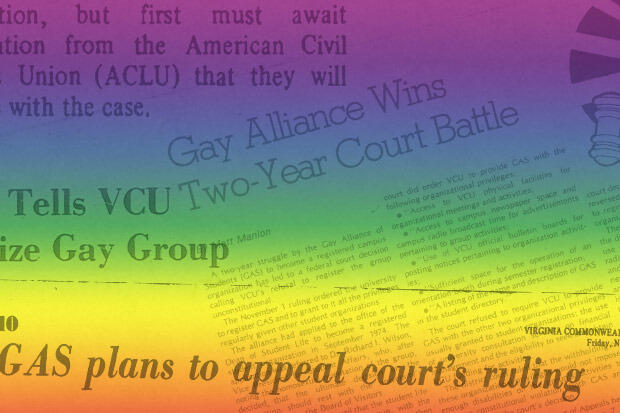
The Gay Alliance of Students was the 145th club to be founded after VCU’s formation in 1968 and the first to be denied official recognition. But the GAS students did not give up. Instead, they defended their First Amendment rights in court, paving the way for future LGBTQ+ student organizations in Virginia and several neighboring states.
VCU Libraries' new digital Gay Alliance of Students collection makes the club’s historic fight for recognition visible through the letters, receipts, memos and legal documents. The collection is housed in Special Collections and Archives and was digitized by the Digital Libraries and Publishing department.
The new collection’s digital publication is timely. VCU kicked off a yearlong celebration this fall, marking the anniversary of GAS, its first LGBTQ+ student organization, and honoring 50 years of student advocacy.
In addition, “Voices of Change: Student Advocacy and Action from the Archives” an exhibit on view in the fourth floor gallery of James Branch Cabell Library, features activism, including the GAS effort. VCU students formed collaborations through organizations that asserted influence on the university administration and created a strong, communal voice for change. “My particular favorite section is the panel on sanctioned activism, which shows how student organizations such as SGA, SAAP and GAS worked with students and administration and legal channels to create real change for VCU,” said University Archivist Cody. “Too often, the only focus on institutional history is through the lens of the administration; this offers a new narrative to the history and growth of VCU.”
Founded in September 1974, the Gay Alliance of Students aimed to establish a voice on campus advocating for LGBTQ+ students and to create a supportive space where they could meet each other and share experiences. This VCU News article features recollections of some of these activist students.
On its first application, submitted by student Brenda C. Kriegel and faculty advisor Stephen M. Lenton, noted the the club’s purpose was “awareness, education, and consciousness-raising among gay students and other concerned students, to alleviate the problems of homophobia, to support the Equal Rights Amendment, [and] to alleviate discrimination of sexual orientation” (“Application for Registration as a Student Organization”).
Typically, applications for student organizations were reviewed and approved by the Office of Student Life. In this case, however, the office forwarded the GAS application to VCU’s Board of Visitors, the university’s highest governing body. The Board denied the application on the basis that:
1) GAS would increase opportunities for homosexual contact;
2) the existence of GAS as a registered organization would encourage some students to join the organization who otherwise might not join;
3) being involved in GAS could be socially and psychologically harmful to individuals;
4) and GAS would tend to attract more homosexuals to VCU.
(Court Opinion, 8).
Unwilling to accept this rejection and the Board of Visitors’ reasoning, the students sought legal help under the First and Fourteenth Amendments. They reached out to state and national LGBTQ+ aid groups and advocated for their club on campus. Gay Alliance of Students v. Matthews began. After a year, a court granted them partial autonomy, but denied several rights, including, quite literally, “the benefits of recognition, per se” (Foery, 1).
In response to incomplete protection, they did not give up. A press release in the collection declares, “at this point we are aware that freedom is lost by timidity as well as by intimidation. We are not timid. We are not intimidated.” (Press Release). The case went to the Fourth Circuit Court of Appeals, which would extend the decision to Maryland, West Virginia, North and South Carolina.
In November 1976, the Gay Alliance of Students succeeded. The Circuit Court ruled in favor of GAS, restoring the rights it had been denied and ensuring GAS’s equal footing with other campus organizations. The decision set a legal precedent for LGBTQ+ student groups and demonstrated the power of students’ voices. The 50th anniversary of this historic ruling is being marked now and through 2026.
The court documents, alongside letters and memos between GAS member Walter Foery and news outlets, queer legal groups and more, are available on Scholars Compass in the Gay Alliance of Students Collection.
< Previous Next >